
What Is Bad Faith?
Bad faith is an insurer’s dishonest, unfair, or unreasonable handling of an insurance claim. The conduct may involve ignoring relevant evidence, delaying investigation, refusing a reasonable settlement, or placing the insurer’s interests above its policy obligations. A bad faith claim focuses on the insurer’s conduct, not only the value or outcome of the underlying injury claim.
Quick Facts About Bad Faith
Category
Insurance claim conduct
Used for
Reviewing unfair claim handling
Common confusion
Not every denied claim involves bad faith
Also called
Insurance Bad Faith, Insurer bad faith
Often discussed with
Insurance Bad Faith Claims, Car Accident Claims
Key Takeaways About Bad Faith
- The focus is the insurer’s conduct during claim handling.
- A strong record connects decisions to available evidence.
- Bad faith is not simply a disagreement over claim value.
How Bad Faith Works

Bad faith describes claim handling that falls below the insurer’s duty to evaluate and respond to a covered claim honestly and reasonably. The analysis considers the information available to the insurer, the steps taken during the investigation, and the reasons given for a decision. A mistake alone does not automatically establish bad faith.
Related glossary terms: Admissible Evidence, Bodily Injury Liability, Settlement Demand.
Records often show how the claim developed over time. Relevant materials may include policy language, medical records, repair estimates, recorded statements, correspondence, and settlement communications. Insurance Bad Faith Claims may involve an unreasonable delay, a refusal to consider clear evidence, or a settlement position that lacks a fair basis. The underlying injury claim and the insurer’s handling of that claim remain related but distinct issues.
From the Atlanta Auto Law team
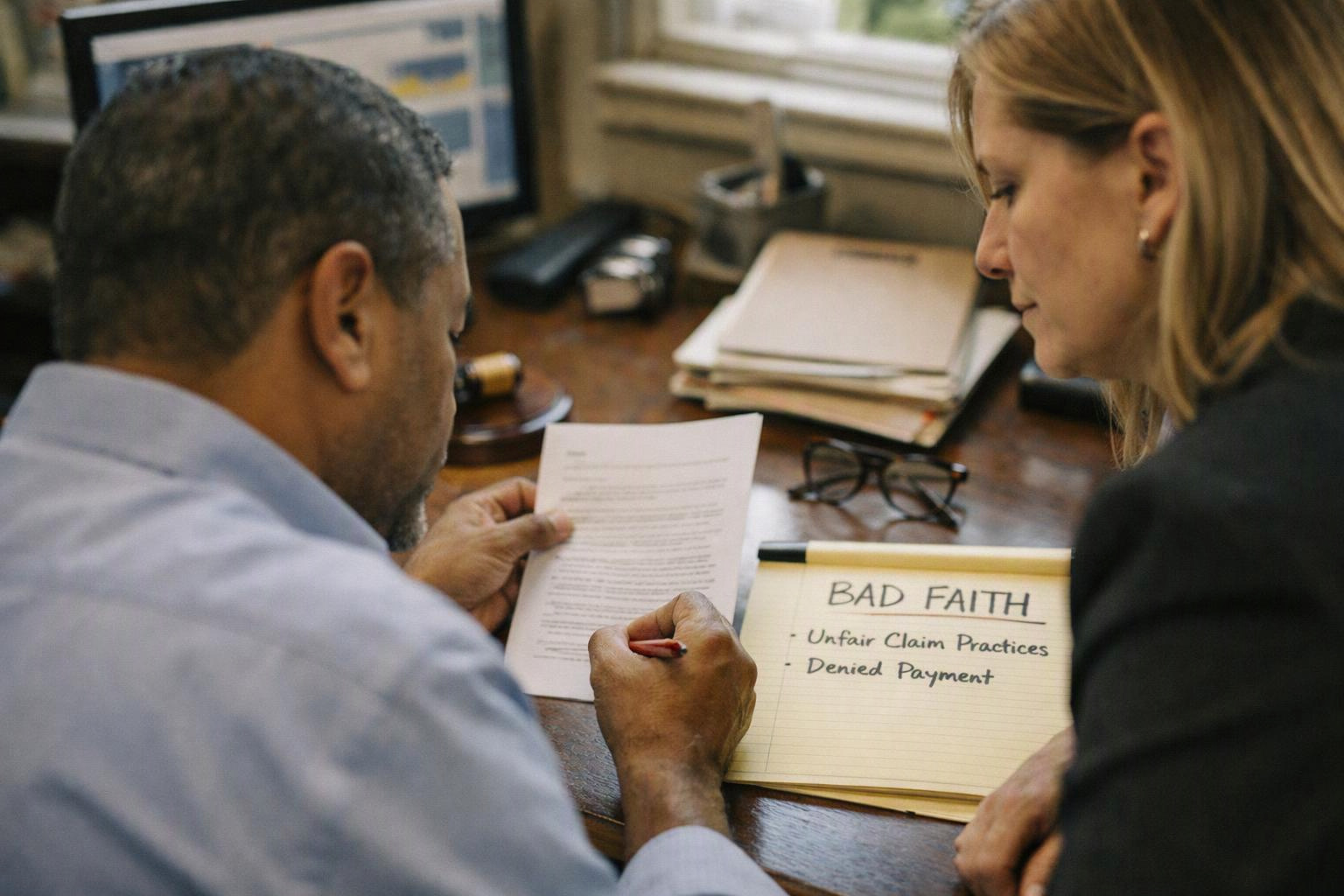
When we review a potential bad faith matter, we trace the insurer’s decisions against the policy, claim file, evidence, and communications. We look for gaps between what the insurer knew and how it responded. We also separate disputes about injury value from conduct that may show unfair claim handling.
Bad Faith in Practice: A Real-World Example
After a collision, an insurer receives medical records and liability evidence supporting the injured person’s claim. The insurer repeatedly ignores that evidence and rejects reasonable settlement discussions without a sound explanation, which may support a bad faith analysis.
Related Services
Related Terms
Admissible Evidence
Admissible Evidence is information that a court may consider when deciding disputed facts in a legal…
Bodily Injury Liability
Bodily Injury Liability is auto insurance coverage that addresses claims against a driver accused of causing…
Settlement Demand
A settlement demand is a written proposal that states how much compensation an injured person seeks…
Underinsured Motorist Coverage
Underinsured Motorist Coverage is insurance protection that may help pay covered losses when an at-fault driver's…
Atlanta Auto Law
Have Questions About Bad Faith?
Contact Atlanta Auto Law for practical guidance on Bad Faith and related personal injury attorney work in East Point.