
What Is a Duty of Care?
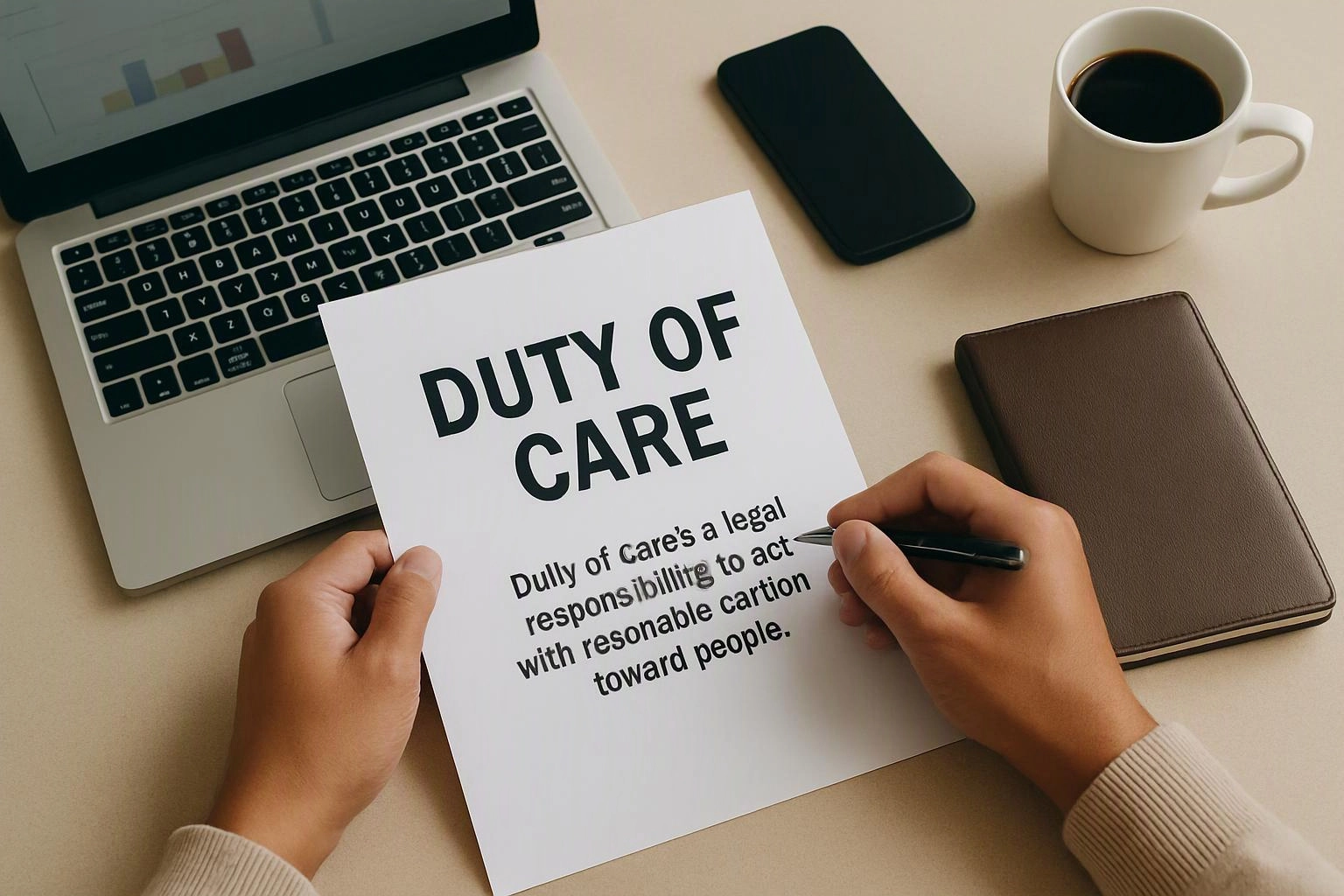
A duty of care is a legal obligation to act with reasonable care toward others who could be harmed by your actions. In a personal injury claim, this obligation forms part of the basis for deciding whether someone may be responsible for an injury.
Quick Facts About Duty of Care
- Category
- Personal injury law
- Used for
- Assessing conduct in injury claims
- Common confusion
- Duty versus breach
- Often discussed with
- Bus Accident Claims
Key Takeaways About Duty of Care
- The expected level of care depends on the circumstances.
- Evidence of conduct helps show whether care fell short.
- An injury alone doesn't establish a breach.
How Duty of Care Works

Duty of care gives a claim a way to assess someone's conduct. The expected care depends on the relationship between the people involved and the circumstances. For example, a driver's role on the road shapes the conduct a claim examines. Related service: Bus Accident Claims.
Related glossary terms: Negligence, Causation, Foreseeability.
A breach is conduct that falls short of the care expected in that situation. A claim may examine what the person knew and what risks were reasonably foreseeable. Witness accounts and available records can help show what happened.
The question of duty is separate from causation. Causation asks whether the conduct contributed to the injury. A claim also considers the harm the injured person suffered. A finding that someone's conduct fell short doesn't by itself establish every part of a claim.
From the Atlanta Auto Law team
When we review a bus accident claim, we look at the driver's actions in context. We also check whether the available records point to decisions by the bus operator. Different people or businesses may have played different roles in the event.
Duty of Care in Practice: A Real-World Example
A bus driver approaches a stop while a passenger is getting off. If the bus moves before the passenger is clear and the passenger falls, the claim may examine the driver's conduct and its connection to the fall.
Related Services
Related Terms
Negligence
Negligence is a failure to use reasonable care that causes harm to another person.
Causation
Causation is the link between an action or failure to act and an injury.
Foreseeability
Foreseeability is a legal concept that asks whether a reasonable person could anticipate a risk of harm under the circumstances.
Damages
Damages are money sought or awarded in a legal claim for harm or loss.
Atlanta Auto Law
Have Questions About Duty of Care?
Contact Atlanta Auto Law for practical guidance on Duty of Care and related personal injury attorney work in East Point.