
What Is Proximate Cause?
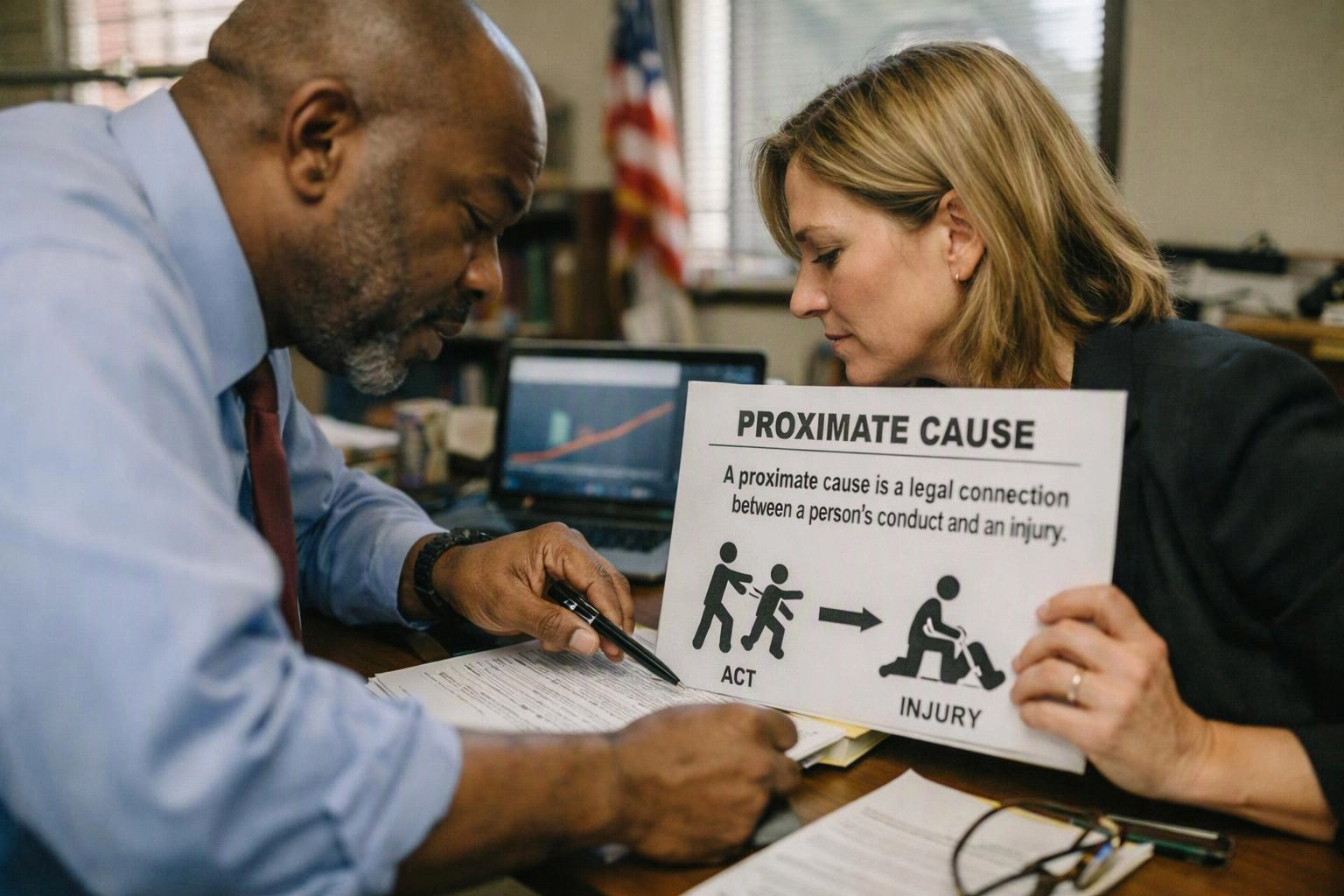
A proximate cause is a legal connection between a person’s conduct and an injury that makes the injury a reasonably foreseeable result of that conduct. In a personal injury claim, the connection must be close enough for the law to treat the conduct as a substantial cause of the harm, not merely a remote background event.
Quick Facts About Proximate Cause
Category
Personal injury law
Used for
Linking conduct to harm
Common confusion
Factual cause
Also called
Legal cause
Often discussed with
Car Accident Lawyer
Key Takeaways About Proximate Cause
- Foreseeability helps distinguish proximate cause from a remote event.
- The connection links conduct to the claimed injury.
- Proximate cause is not the same as factual cause.
How Proximate Cause Works
Proximate cause connects the defendant’s conduct to the injury claimed in a lawsuit. The analysis asks whether the injury followed in a reasonably foreseeable way from the conduct. A person may have acted carelessly, yet the legal connection can fail if an unusual event breaks the chain.
Related glossary terms: Negligence, Duty of Care, Comparative Negligence.
In a car accident claim, the evidence may include traffic conditions, vehicle movement, witness accounts, medical records, and the timing of symptoms. Negligence addresses whether a person breached a duty of care. Proximate cause addresses whether that breach legally led to the injury. Comparative negligence may affect responsibility when the injured person’s conduct also contributed to the event.
From the Atlanta Auto Law team
When we review a car accident claim, we trace the events from the alleged careless conduct to the reported injury. We compare the crash evidence with medical records and other records that show whether the injury followed in a legally predictable way. We also examine intervening events that may change the analysis.
Proximate Cause in Practice: A Real-World Example
A driver follows another vehicle too closely and strikes it when traffic slows. The collision causes the other driver’s back injury, so the unsafe following distance may be both a factual cause and a proximate cause of the injury.
Related Services
Related Terms
Negligence
Negligence is a failure to use reasonable care under the circumstances. In a personal injury claim…
Duty of Care
Duty of Care is a legal responsibility to act with reasonable caution toward people who could…
Comparative Negligence
Comparative Negligence is a legal method for assigning fault when more than one party contributed to…
Accident Reconstruction
Accident Reconstruction is a technical analysis that examines vehicle damage, roadway evidence, witness accounts, photographs, and…
Atlanta Auto Law
Have Questions About Proximate Cause?
Contact Atlanta Auto Law for practical guidance on Proximate Cause and related personal injury attorney work in East Point.