
What Is Comparative Negligence?
Comparative Negligence is a legal method for assigning fault when more than one party contributed to an injury. A court or insurer may reduce an injured person’s recovery according to that person’s share of responsibility. The rule can apply in premises liability claims, including slip and fall cases involving unsafe property conditions.
Quick Facts About Comparative Negligence
Category
Fault allocation rule
Used for
Injury and premises liability claims
Common confusion
Shared fault does not always defeat a claim
Also called
Comparative fault
Often discussed with
Slip and Fall Lawyer
Key Takeaways About Comparative Negligence
- Fault may be shared by the injured person and the property owner.
- Evidence can affect how responsibility is assigned.
- Comparative negligence is not the same as complete fault.
How Comparative Negligence Works
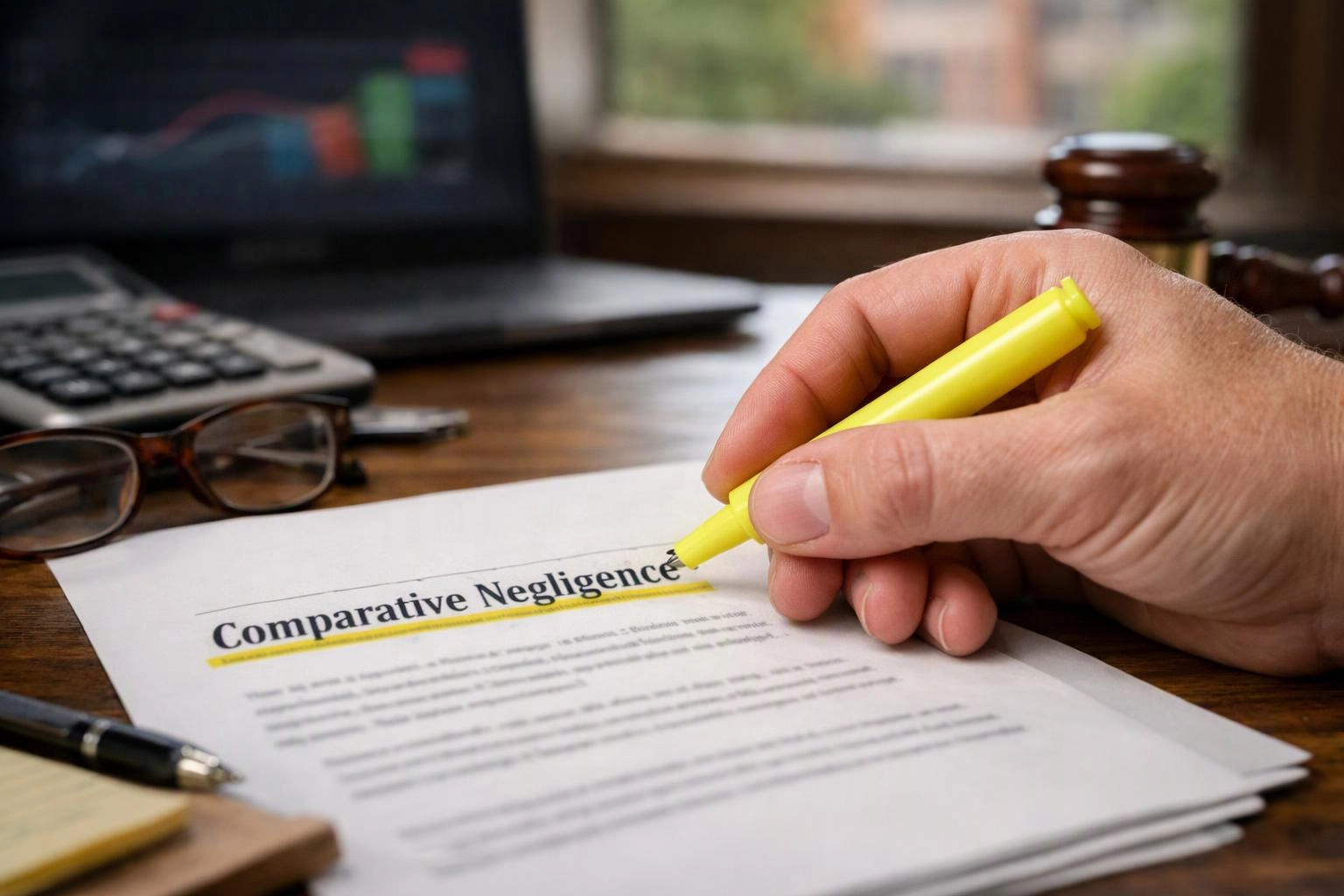
Comparative negligence works by examining the conduct of each person connected to an injury. In a slip and fall claim, the analysis may consider the property hazard, how long the condition existed, whether warning signs were present, and how the injured person moved through the area. Evidence can include photographs, incident reports, witness accounts, and medical records.
Related glossary terms: Negligence, Premises Liability, Duty of Care.
The assigned share of fault can affect the damages available to the injured person. A property owner may argue that the injured person ignored an obvious condition or failed to take reasonable care. The injured person may respond that poor lighting, blocked views, missing warnings, or an unsafe walking surface limited the ability to avoid the hazard. The final assessment depends on the facts and applicable law.
From the Atlanta Auto Law team
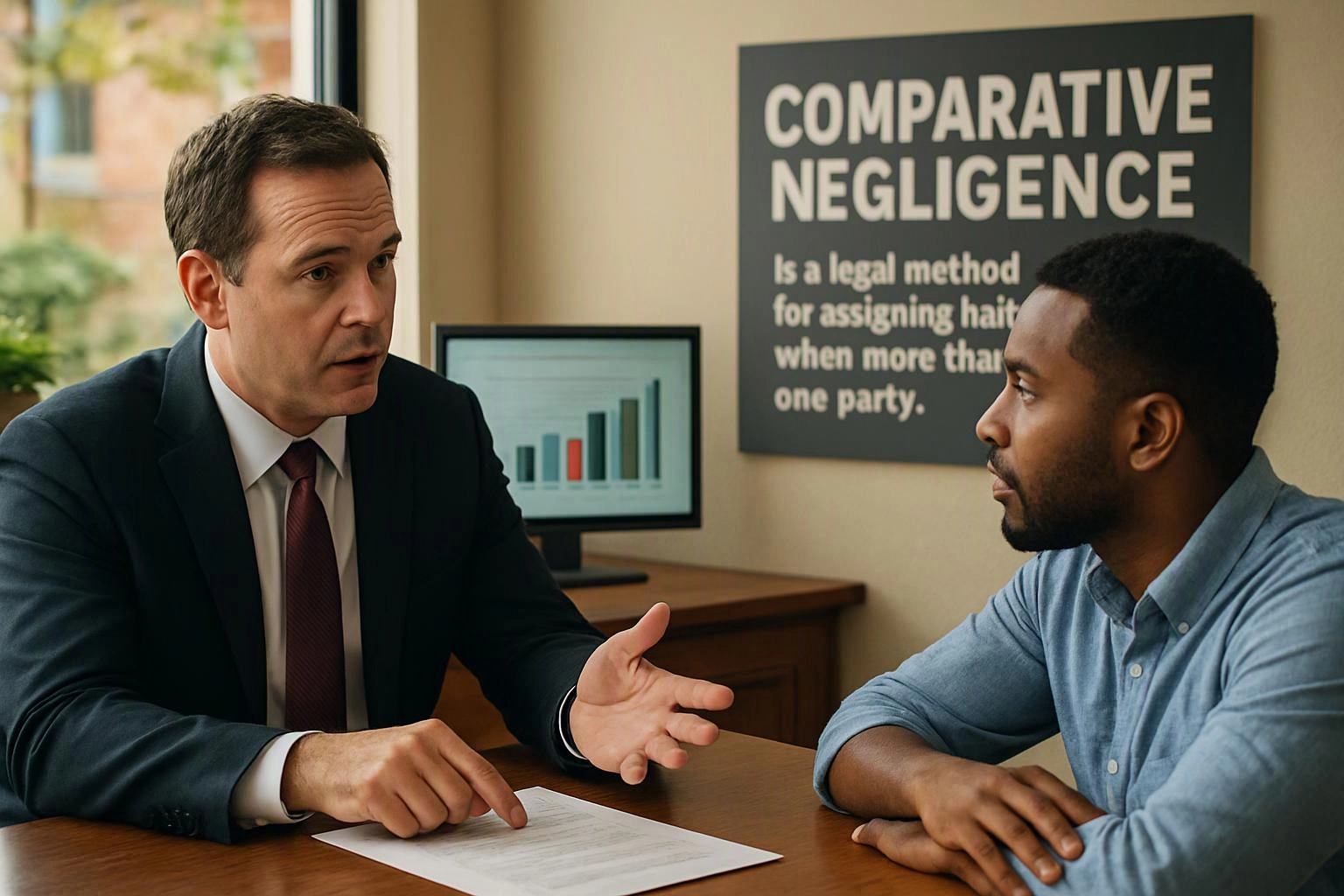
When we review a slip and fall claim, we examine both the property condition and the person’s actions before the fall. We compare photographs, witness accounts, inspection records, and medical documentation to address arguments about shared responsibility. That review helps separate proven facts from assumptions about how the incident occurred.
Comparative Negligence in Practice: A Real-World Example
A shopper falls on liquid near a store entrance where no warning sign is visible. The store may bear responsibility for the hazardous condition, while the shopper’s attention, footwear, and ability to see the liquid may affect the assigned fault.
Related Services
Related Terms
Negligence
Negligence is a failure to use reasonable care under the circumstances. In a personal injury claim…
Premises Liability
Premises Liability is a legal concept involving injuries caused by unsafe conditions on property. A property…
Duty of Care
Duty of Care is a legal responsibility to act with reasonable caution toward people who could…
Proximate Cause
A proximate cause is a legal connection between a person’s conduct and an injury that makes…
Atlanta Auto Law
Have Questions About Comparative Negligence?
Contact Atlanta Auto Law for practical guidance on Comparative Negligence and related personal injury attorney work in East Point.