What to Discuss With a Bus Accident Lawyer
Bus accident discussions with Atlanta Auto Law should cover how the crash happened, your injuries, available evidence, responsible parties, insurance, deadlines, and the claim process so our team can assess your legal options.
Request an EstimateWhat Should You Tell a Bus Accident Lawyer First?
Bus accident lawyer consultations begin with the basic crash facts, your symptoms, treatment history, and the names of people who saw what happened. Atlanta Auto Law uses these details to understand the crash circumstances and identify early concerns about fault.
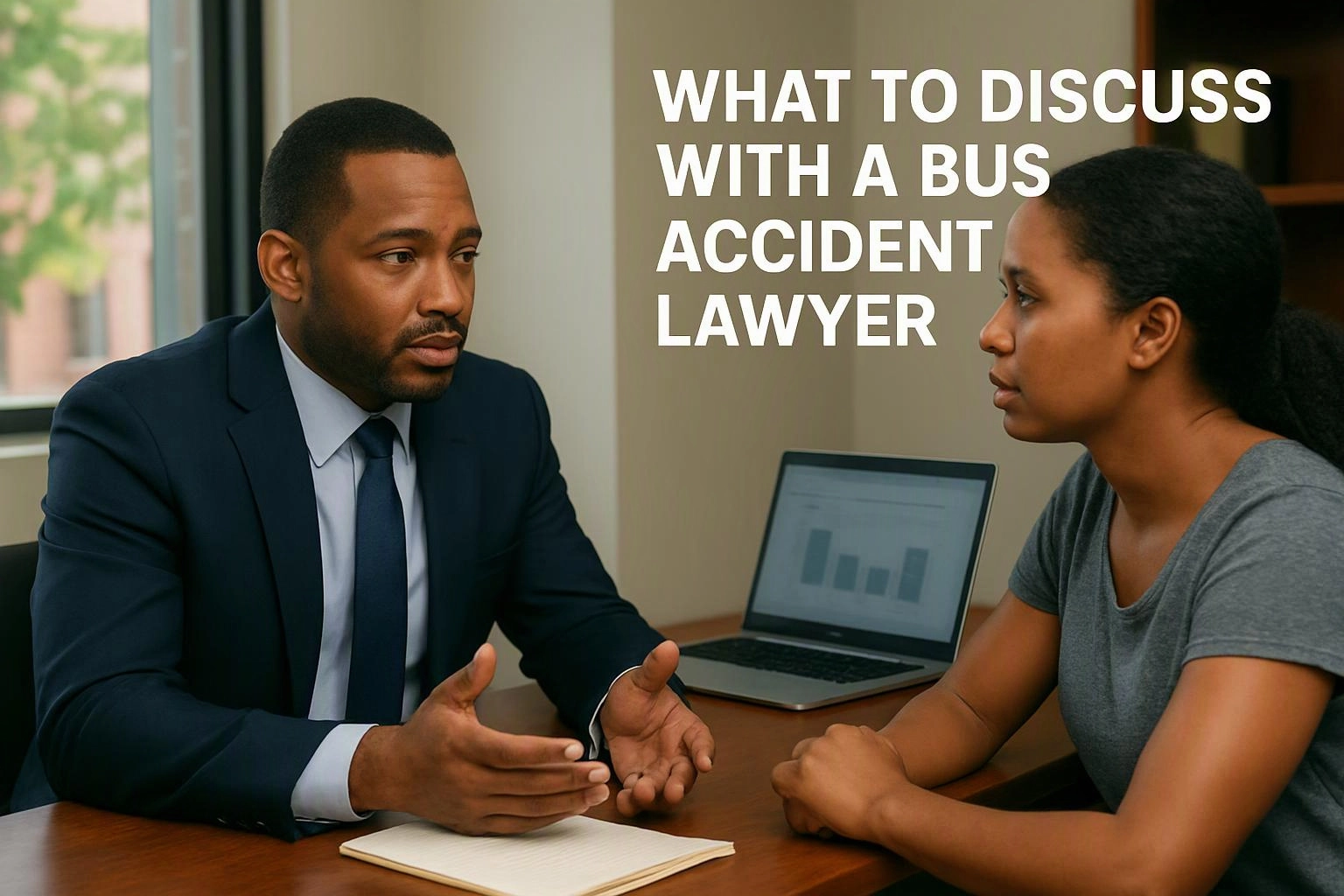
Explain where you were, what the bus driver did, how the collision occurred, and whether you were a passenger, pedestrian, cyclist, or another driver. Describe each injury symptom, the medical treatment you received, and any change in your daily activities or ability to work.
Witness names and contact information can help preserve witness evidence. Tell us about lost income, property damage, statements made at the scene, and any contact from an insurer.
Which Evidence Can Support a Bus Accident Claim?
Bus accident evidence can show how the collision happened, who had control, and how the injuries developed. Our team organizes available records and works to preserve evidence before it becomes harder to obtain.
Useful materials may include the following:
Who May Be Responsible for a Bus Crash?
Liability for a bus crash depends on who controlled the vehicle, caused the collision, maintained the bus, or contributed to the unsafe condition. Atlanta Auto Law investigates possible negligence by reviewing driver conduct, company policies, vehicle maintenance, and the surrounding facts.
A bus driver may be responsible for negligent driving, distraction, impairment, or another breach of duty. A bus company or transit operator may face responsibility when its hiring, supervision, scheduling, training, or maintenance decisions contributed to the crash.
A government entity may be involved when a public bus, public road, traffic device, or government-controlled condition played a role. A vehicle manufacturer or maintenance contractor may also be relevant if a defective part or poor repair contributed to the collision.
Our liability analysis considers causation, comparative fault, and the evidence connecting each party to the personal injury claim.
What Insurance and Legal Deadlines Should You Discuss?
Insurance coverage depends on the parties involved, the type of bus, the jurisdiction, and the facts of the claim. We review liability insurance, commercial insurance, uninsured motorist coverage, and any policy issues raised by the collision.
An insurance adjuster may ask for a recorded statement, medical authorization, or other information. Discuss those requests with us before making statements that could affect the claim.
The statute of limitations controls when a personal injury lawsuit may be filed. A government claim can also involve a separate government notice requirement, so the responsible entity and the applicable deadline need prompt review.
We identify the relevant claim deadline, gather the needed records, and explain how the deadline affects settlement discussions and litigation options.
What Questions Should You Ask About the Legal Strategy?
A legal consultation should explain how the claim may be evaluated and what work comes next. These questions can help you understand the investigation, possible settlement, and personal injury lawsuit options.
Bring questions about the evidence, damages, risks, and communication process. Our team will connect the answers to the facts of your claim.
How Do Rideshare, Hit-and-Run, and Drunk Driving Crashes Change the Discussion?
Rideshare, hit-and-run, and drunk driving facts can change the available insurance and the way liability is investigated. The table below shows the main issues to raise during a consultation.
We examine the conduct of each driver, the applicable commercial insurance, and evidence that may identify another responsible party.
| Crash type | Discussion points |
|---|---|
| Rideshare accident | Identify whether the rideshare driver was logged in, carrying a passenger, or between trips. Review the possible commercial insurance and the roles of the bus and rideshare drivers. |
| Hit-and-run accident | Gather the vehicle description, direction of travel, visible damage, video footage, witnesses, and any identifying details. Review uninsured motorist coverage and other possible sources of recovery. |
| Drunk driving crash | Discuss police records, test results, citations, witness accounts, and the effect of criminal conduct on the civil liability analysis. |
What Should You Discuss After a Boating Accident?
Boating accident discussions should cover the vessel, operator conduct, waterway conditions, passenger status, injuries, and evidence preserved after the incident. Our team reviews whether waterway rules, boater liability, or another party's conduct may affect the claim.
Explain who operated the vessel, who owned it, where the incident occurred, and whether you were a passenger or another person on the water. Preserve photographs, communications, incident reports, medical records, and other maritime evidence.
Water conditions, visibility, speed, safety equipment, and operator decisions may help explain causation. We use the available facts to assess personal injury damages and possible recovery options.
How Does Atlanta Auto Law Review a Bus Accident Case?
Atlanta Auto Law reviews the crash circumstances, available evidence, injuries, responsible parties, insurance issues, and applicable deadlines to explain the available claim options.
Our case review begins with your account and the records you can provide. We then examine the accident investigation, assess liability, document the injury course, and evaluate the insurance claim.
We explain whether settlement discussions may be appropriate, what damages may be supported, and when a personal injury lawsuit may be considered. You can contact us through Bus Accident Lawyer to discuss the facts of your consultation.
What Should You Bring to the Consultation?
Consultation materials help our team verify the crash, document your injuries, and identify insurance and deadline issues. Bring what you have, even if the records are incomplete.
Useful materials include:
Questions About Bus Accident Lawyer Consultations
What if I do not have the bus driver's information?
Atlanta Auto Law can review other identifying evidence, such as the route, location, vehicle appearance, company markings, witnesses, photographs, and video footage. A missing driver name does not by itself prevent an investigation.
Should I speak with the bus company's insurance adjuster before consulting a lawyer?
No. Discuss the adjuster's questions and any requested statement with our team before responding, because your statements may affect the insurance claim.
Can a passenger bring a claim if the bus was partly responsible for the crash?
Yes. A passenger may have a claim when bus negligence or another party's conduct caused or contributed to the injury, subject to the applicable fault rules, insurance coverage, and deadlines.
What information helps identify a bus after a hit-and-run?
Helpful information includes the route, direction of travel, bus markings, vehicle color, damage, location, time of the crash, witness accounts, and nearby video footage.
What should I discuss if a rideshare vehicle was involved in the bus crash?
Discuss the rideshare driver's app status, passenger status, trip details, vehicle damage, available insurance, and how the bus and rideshare vehicles interacted. These facts may affect commercial insurance and liability.
How can an impaired driver's conduct affect a bus accident claim?
Impaired driving evidence may support the liability analysis and may affect how the civil claim is evaluated. Police records, test results, citations, and witness accounts can help establish the driver's conduct.
Atlanta Auto Law reviews your bus accident claim, preserves relevant evidence, and explains the available legal options during a consultation.