Workers’ Compensation Mistakes to Avoid After a Workplace Injury
Workers’ compensation claims can involve difficult evidence and benefit issues; Atlanta Auto Law helps injured workers evaluate delayed reports, missed treatment, inconsistent details, unsigned documents, and possible retaliation.
Request an EstimateWhy Common Workers’ Compensation Mistakes Matter
Workers’ compensation mistakes matter because inaccurate reports, missed treatment, and incomplete evidence can make a claim harder to evaluate. A workplace injury claim may require consistent information from the employee, employer, insurer, and medical providers.
Medical evidence can affect whether the workers’ compensation insurer accepts the injury, provides benefits, or disputes the connection between work and the condition. We review the available records and communications to identify gaps that may affect the injured worker’s rights.
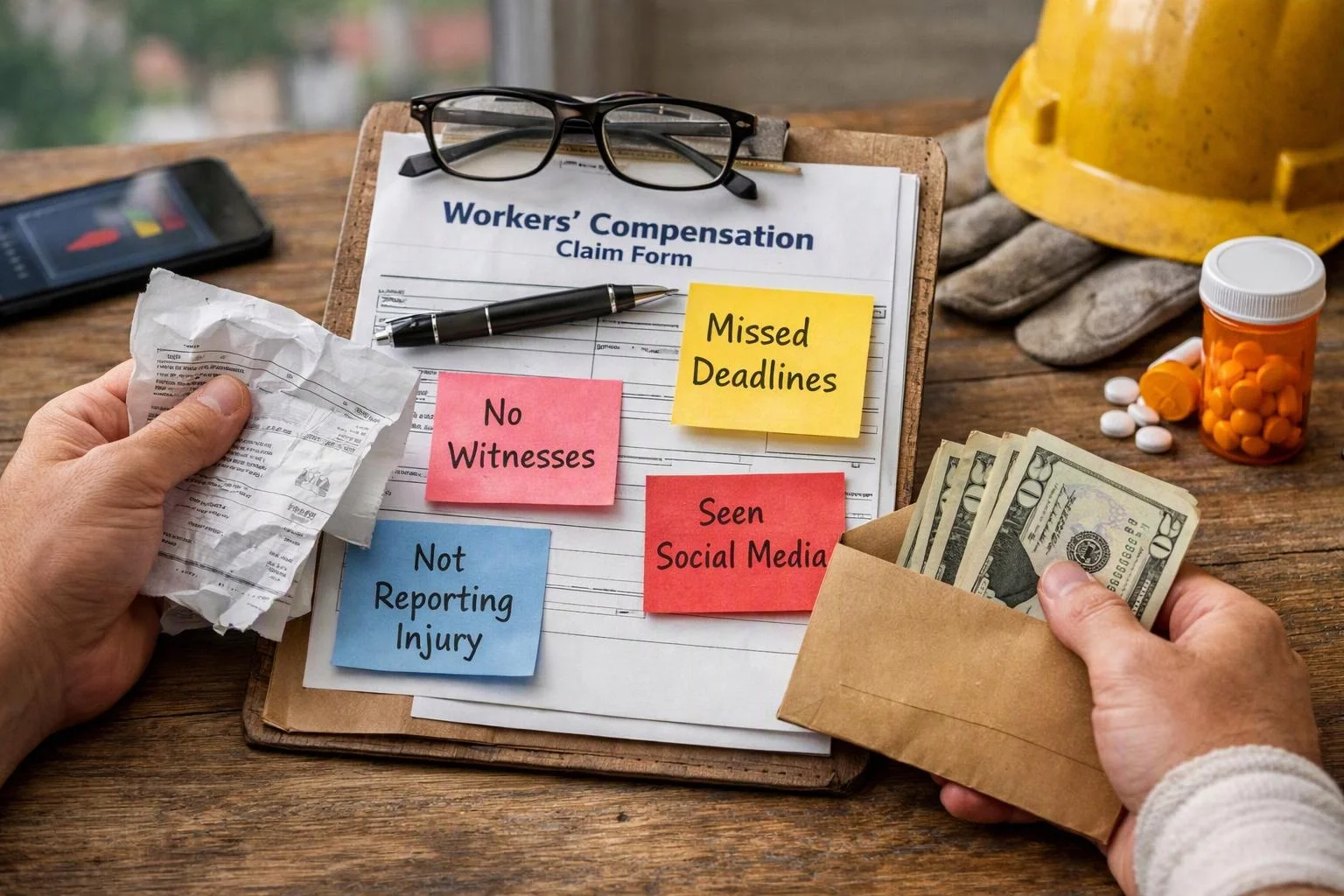
The Mistakes That Can Weaken a Workplace Injury Claim
A workplace injury claim depends on clear claim documentation, timely notice, medical support, and accurate statements. Small omissions can create questions about the injury, treatment, work capacity, or requested workers’ compensation benefits.
Our team examines how each issue arose, what evidence remains available, and how the issue may be corrected. The right response depends on the facts of the work injury claim and the insurer’s position.
Mistake 1: Waiting to Report the Workplace Injury
Delaying notice of a workplace injury can create questions about when, where, and how the injury occurred. Workers may wait because symptoms seem minor, a supervisor discourages reporting, or the employee fears workplace consequences.
The possible cost is weaker employer notice and less reliable evidence about the accident date or workplace incident. Report the injury promptly and keep a copy of the injury report or another record showing the notice to the employer.
Mistake 2: Failing to Explain How the Injury Happened
An incomplete accident description can obscure the connection between work and the medical condition. The mechanism of injury may be unclear when the worker leaves out the task, movement, equipment, or surrounding event.
The possible cost is a disputed occupational injury claim or inconsistent medical history. Record the relevant facts while they are fresh, identify witnesses, and give providers a clear account of the work event.
Mistake 3: Delaying Medical Treatment or Ignoring Restrictions
Skipping recommended medical treatment or disregarding work restrictions can create gaps in medical evidence and may worsen the injury. Delays can also make it harder to show how symptoms changed after the workplace incident.
The possible cost includes disputed medical benefits, questions about causation, or confusion about whether the condition reached maximum medical improvement. Follow authorized medical care, attend appointments, and document changes in symptoms and work status.
Mistake 4: Giving Inconsistent Information About the Injury
Inconsistent descriptions can cause an insurer to question the claim. Differences may appear between the claim statement, medical history, employer notice, and answers given to an insurance adjuster.
The possible cost is reduced credibility and a more difficult claim investigation. Review dates, symptoms, duties, and prior medical history carefully before providing a recorded statement, and ask for help when the questions are unclear.
Mistake 5: Signing a Settlement or Form Without Understanding It
Signing a settlement agreement, claim release, or workers’ compensation form can affect future benefits and medical rights. A document may resolve issues that are not obvious from its title.
The possible cost is losing access to future medical care or other legal rights connected to the claim. Understand what the document resolves, what it preserves, and what obligations it creates before signing it.
Mistake 6: Failing to Preserve Evidence and Witness Details
Lost photographs, witness contact information, incident reports, employment records, and surveillance video can make the incident harder to prove. Evidence may disappear as memories fade or workplace records change.
The possible cost is a weaker account of the accident and less support for the requested benefits. Preserve relevant records, save messages, identify witnesses, and note where additional evidence may exist.
Mistake 7: Returning to Work Without Addressing Medical Restrictions
Returning to work without clear medical restrictions can aggravate an injury and create confusion about work capacity. Employees may accept light duty or modified duty without confirming whether the tasks fit the doctor’s restrictions.
The possible cost is a worsening condition, disputed wage benefits, or uncertainty about the employee’s actual limitations. Communicate documented restrictions before resuming duties and report problems with assigned work.
Mistake 8: Assuming a Denied Claim Is the End of the Process
A denied workers’ compensation claim is a disputed claim that may require a timely review of the denial, supporting evidence, and available legal remedies. An insurer may dispute the injury, medical treatment, work connection, or benefit request.
The possible cost is lost access to benefits when the denial is not addressed. Preserve the denial, review the stated reasons, gather supporting records, and evaluate whether an appeal or administrative hearing is available.
Mistake 9: Ignoring Retaliation After Reporting an Injury
Workplace retaliation can include adverse treatment after reporting an injury or seeking benefits. Termination, discipline, reduced hours, undesirable assignments, or pressure about the claim may be relevant facts.
The possible cost is losing evidence of protected activity and the employer’s response. Preserve messages, schedules, disciplinary records, witness details, and other information that may show a connection between the report and the adverse treatment.
What to Do After a Workplace Injury
After a workplace injury, prompt organization can protect the claim record. The following steps help connect the incident, medical evaluation, work restrictions, and benefits request.
When Should You Contact Atlanta Auto Law About a Workers’ Compensation Claim?
Contact Atlanta Auto Law when a workers’ compensation claim involves a denial, disputed medical evidence, pressure to sign documents, or retaliation after reporting the injury. Legal review can also help when medical benefits or lost wages are unclear.
We can review whether the issue is suitable for a Workers' Compensation Lawyer and explain the records that may support the claim. Contact us instead of handling the issue alone when:
How Atlanta Auto Law Reviews a Workplace Injury Matter
Atlanta Auto Law reviews the injury account, employer notice, medical records, work restrictions, claim communications, and possible retaliation to identify issues affecting the worker’s rights. We compare the available accounts and records to understand where the claim is supported or challenged.
Our team may also examine employment records, wage information, medical treatment, and communications with the workers’ compensation insurer. When the facts suggest workplace retaliation, we evaluate whether a Workplace Retaliation Lawyer or FMLA violation lawyer should address related employment rights.
We explain the claim issues in plain language and help the injured worker understand possible next steps. The review may involve a workers’ compensation claim, an occupational disease claim, a repetitive stress injury claim, or a related employment law matter.
How Can You Avoid Common Workers’ Compensation Mistakes?
You can avoid common workers’ compensation mistakes by reporting the injury promptly, following medical guidance, preserving records, checking documents before signing, and addressing retaliation quickly. Clear claim documentation helps connect the workplace event to the medical condition and requested benefits.
We help workers assess confusing claim communications, disputed medical treatment, work restrictions, and possible legal violations. Early legal consultation can also help protect evidence before a claim dispute becomes harder to resolve.
Questions About Workers’ Compensation Mistakes
Can an employer fire you for filing a workers’ compensation claim?
Atlanta Auto Law reviews whether termination after filing a workers’ compensation claim may support a workplace retaliation claim. The timing, employer communications, disciplinary history, schedules, and other retaliation evidence can affect that review.
What should you do if your workers’ compensation claim is denied?
A denied workers’ compensation claim should be reviewed promptly with the denial notice, medical records, employer notice, and supporting claim documentation. The available response may include an appeal or administrative hearing, depending on the facts and applicable rules.
Should you give a recorded statement to the workers’ compensation insurer?
A recorded statement should be handled carefully because an insurance adjuster may use the answers to evaluate the claim. Review the accident description, medical history, dates, symptoms, and work duties before providing information, and seek legal guidance when the request is unclear or disputed.
Can you change doctors after a workplace injury?
Changing doctors after a workplace injury may depend on authorization rules, the reason for the change, and the status of the workers’ compensation claim. Review the authorized physician process before changing medical providers so treatment and medical records remain connected to the claim.
What evidence helps prove a workplace injury?
Evidence that may help prove a workplace injury includes the injury report, medical records, photographs, witness evidence, employment records, work restrictions, wage records, and claim correspondence. The strongest records usually give consistent details about the event, symptoms, treatment, and work capacity.
Can you receive workers’ compensation and FMLA leave for the same injury?
Workers’ compensation and FMLA leave can sometimes apply to the same workplace injury, but the programs address different rights and requirements. Review the leave designation, medical certification, job protection, and benefit issues together to identify a possible FMLA violation or benefits problem.
Protect Your Rights After a Workplace Injury
Workers’ compensation mistakes can affect medical benefits, lost wages, claim evidence, and workplace rights. Atlanta Auto Law reviews the facts and helps injured workers understand the next step.
Contact Atlanta Auto Law to discuss your workers’ compensation claim and possible retaliation concerns.
Free Consultations