Can You File Workers’ Compensation and a Car Accident Claim?
Workers’ compensation and a personal injury claim can both apply after a work-related car accident when another party may be legally responsible; Atlanta Auto Law reviews the employment, insurance, fault, and claim issues together.
Request an EstimateCan You File Workers’ Compensation and a Personal Injury Claim?
Yes, both claims may be available when the crash occurred in the course of employment and a separate party may have caused or contributed to the collision.
A workers’ compensation claim generally addresses an employee’s workplace injury through the employer’s system. A personal injury claim may seek recovery from a negligent third party, such as an at-fault driver, vehicle owner, manufacturer, or another responsible party.
These claims involve different rules, insurers, and types of recovery. We review the work connection, accident facts, bodily injury evidence, and available insurance coverage together so one claim does not undermine the other.
When Do Both Claims Apply After a Work-Related Crash?
Both claims may apply when the employee suffered an injury during work activity and another person or business may share legal fault.
The course and scope of employment matters because a personal trip may not qualify as a work-related accident. We examine the purpose of the trip, job duties, employer instructions, and the location of the crash.
How Do Workers’ Compensation and a Personal Injury Claim Work Together?
Workers’ compensation and a personal injury claim can work together when each claim addresses different parts of the loss and the responsible insurers coordinate their positions.
Payment from one claim does not automatically resolve the other claim. We track claim records, insurer communications, medical treatment, and settlement terms to identify overlap and address any workers’ compensation lien.
What Does Each Claim Cover?
Workers’ compensation benefits and personal injury damages cover different losses, so the available recovery depends on the claim system and the facts.
The following comparison shows how common categories may be handled.
| Loss or issue | Workers’ compensation | Personal injury claim |
|---|---|---|
| Medical treatment | May cover authorized care for the workplace injury. | May seek damages for reasonable medical expenses caused by the third party. |
| Wage replacement | May provide wage replacement under workers’ compensation rules. | May seek lost wages and other income losses supported by the claim evidence. |
| Pain and suffering | Usually handled under the limits of the workers’ compensation system. | May include pain and suffering when the law and facts support those damages. |
| Property damage | Generally does not serve as the primary claim for vehicle or personal property loss. | May seek vehicle and other property damage from a liable party’s insurance. |
| Comparative fault | Handled under workers’ compensation rules. | May reduce or affect recovery based on the parties’ assigned fault. |
What Should You Do After a Work-Related Car Accident?
After a work-related car accident, protect both claims by reporting the crash, obtaining medical care, and preserving records.
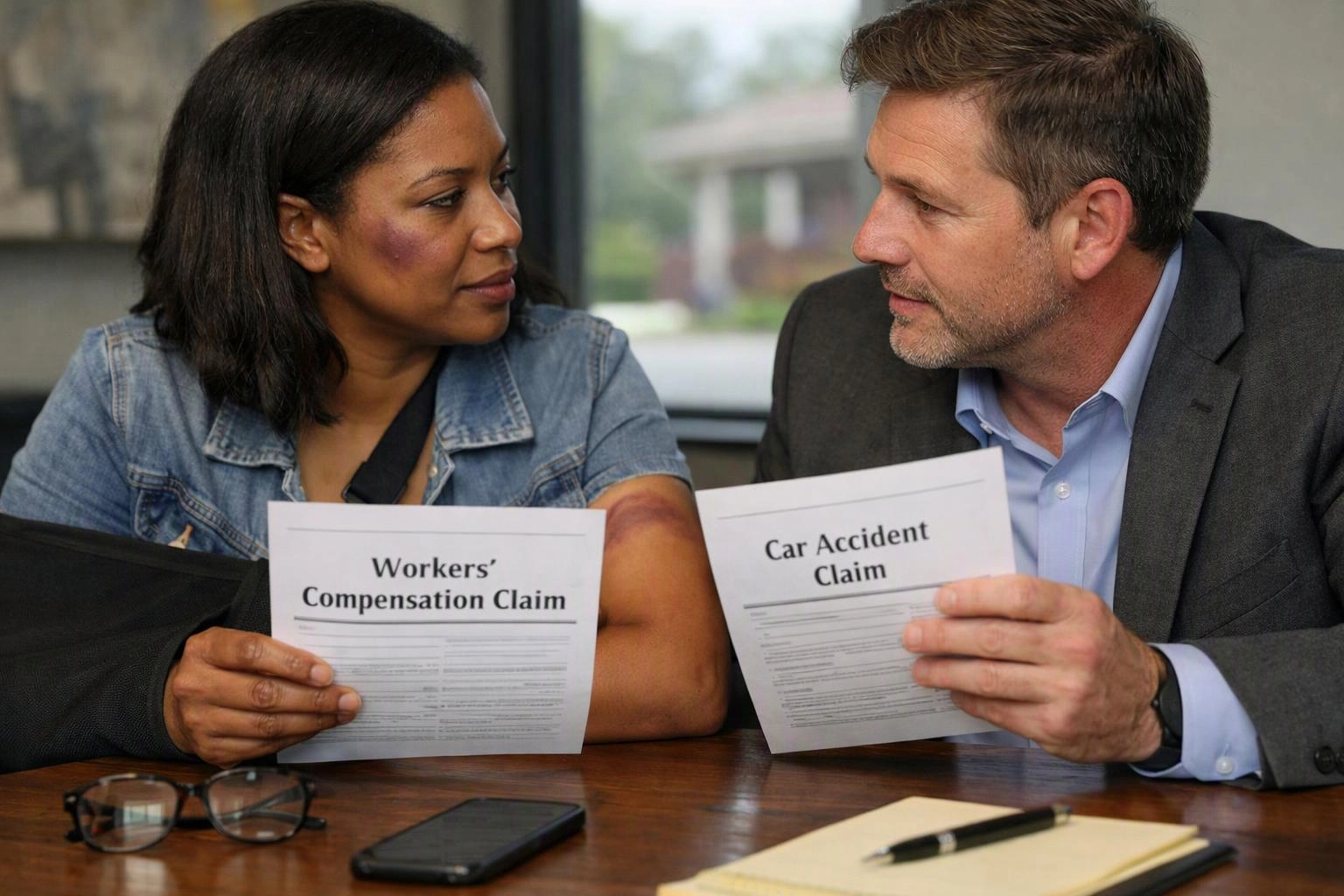
Early statements can affect both the workers’ compensation claim and the third-party claim. We help organize the facts before insurance communications create avoidable problems.
What Can Change the Value and Handling of Both Claims?
The facts that most affect both claims are the work purpose of the trip, each party’s fault, the available insurance, the injury evidence, and how workers’ compensation benefits interact with a recovery from another liable party.
Employment status and the scope of employment can affect whether the crash qualifies as a workplace injury. Vehicle ownership, commercial insurance, employer conduct, and the identity of the at-fault driver can affect third-party liability.
Injury severity and consistent medical treatment can affect the evidence for medical expenses, lost wages, and pain and suffering. We also review the workers’ compensation lien, subrogation issues, comparative fault, and available insurance coverage before evaluating a settlement.
How We Coordinate the Legal Review
Atlanta Auto Law coordinates the legal review by investigating the crash, identifying each claim, and examining how the insurance systems interact.
Our team reviews employment records, accident evidence, medical documentation, vehicle ownership, insurance policies, and fault arguments. We communicate with the insurance adjuster as appropriate and track the workers’ compensation insurer’s position.
We then compare the available recovery, claim deadlines, lien concerns, and settlement terms. When the issues require separate legal roles, our review can include coordination with a Workers’ Compensation Lawyer and a Car Accident Lawyer.
What Happens If the Other Driver Was Not at Fault?
A workers’ compensation claim may still apply when no outside driver caused the crash, while a separate personal injury claim depends on evidence that another legally responsible party contributed to the injuries.
A single-vehicle crash may involve employer negligence, a vehicle defect, or a dangerous roadway condition. Those facts may support a third-party claim even when no other driver was involved.
We investigate the vehicle, maintenance history, roadway conditions, employer instructions, and available records. If the evidence does not establish third-party liability, the workers’ compensation claim may remain the primary source of injury benefits.
Which Records Help Support Both Claims?
Records that connect the crash to employment and document the injury can support both claims.
We organize these materials into a consistent claim record. Clear documentation helps us address disputed facts, insurer requests, and lien questions.
When Should You Discuss Both Claims With Atlanta Auto Law?
Discuss both claims with Atlanta Auto Law when a crash happened during work and the facts suggest that another driver, vehicle owner, employer, manufacturer, or other party may share responsibility.
Claim deadlines and workers’ compensation notice requirements can affect your rights. An insurance adjuster’s request for a statement or records can also affect how the third-party liability claim develops.
We review the employment connection, available insurance coverage, medical evidence, fault, claim records, and settlement options before helping shape a claim strategy.
Contact Atlanta Auto Law for a coordinated review of your work-related car accident and potential claims.
Questions About Workers’ Compensation and Car Accident Claims
Can I file workers’ compensation if I was driving my own car for work?
Yes, workers’ compensation may apply when an employee was driving a personal vehicle in the course and scope of employment. Atlanta Auto Law reviews the work purpose of the trip, employer instructions, timing, route, and accident facts.
Can I sue the other driver if workers’ compensation paid my medical bills?
Yes, you may pursue a personal injury claim against the other driver when evidence supports third-party liability. The workers’ compensation insurer may assert subrogation rights or a lien, so both claims should be reviewed together.
What if the other driver had no insurance?
Workers’ compensation may still provide benefits for a qualifying work-related injury, while an uninsured-motorist policy or another source of insurance coverage may affect a third-party claim. We review all potentially available policies and the claim deadlines that apply.
Does workers’ compensation cover a crash during a work commute?
Workers’ compensation coverage for a work commute depends on the facts and applicable state law. The purpose of the trip, employer control, special work duties, and route can affect the analysis.
Can an employer be responsible for a work-related car accident?
An employer may face third-party liability when its negligence or conduct contributed to the crash, subject to the facts and applicable law. Employer vehicle ownership, maintenance, supervision, work instructions, and vehicle defects may also affect the claim.