
What Is Assumption of Risk?
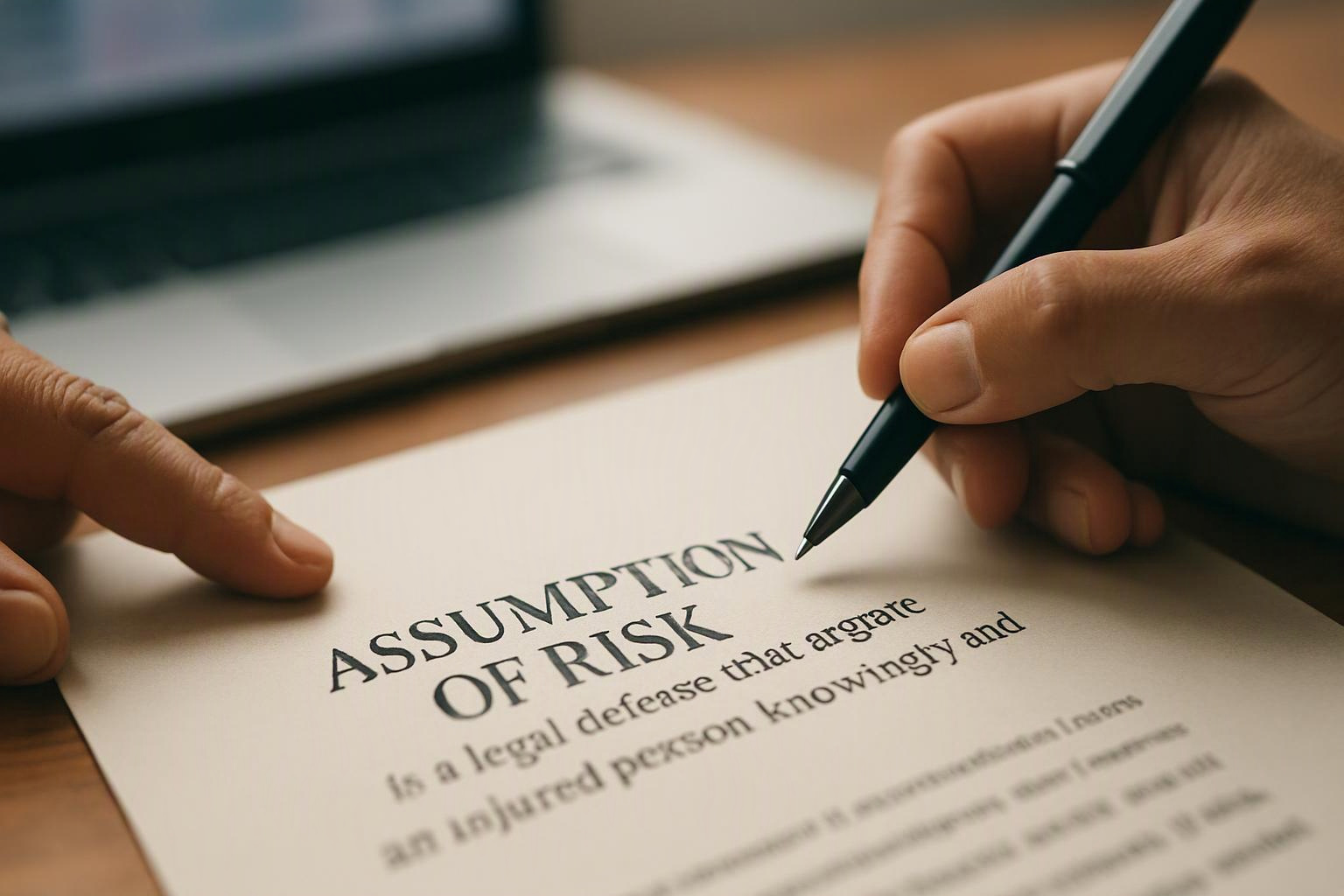
Assumption of Risk is a legal defense that argues an injured person knowingly and voluntarily accepted a specific danger before the injury occurred. The defense focuses on what the person understood, what danger the person encountered, and whether the conduct showed a willing choice to face that danger. Its effect depends on the facts and governing law.
Quick Facts About Assumption of Risk
Category
Legal defense
Used for
Evaluating injury claims
Common confusion
Mistaking awareness for acceptance
Also called
Voluntary assumption of risk
Often discussed with
Slip And Fall Claims
Key Takeaways About Assumption of Risk
- Knowledge of the specific danger is central.
- A warning alone does not always prove voluntary acceptance.
- Assumption of Risk differs from ordinary carelessness.
How Assumption of Risk Works

Assumption of Risk works by examining the relationship between a known danger and the injured person’s conduct. A party asserting the defense may point to warnings, agreements, prior experience, or visible conditions. The key question is whether the person understood the particular risk and freely chose to encounter it.
Related glossary terms: Comparative Negligence, Duty of Care, Negligence.
A person’s awareness of a condition does not automatically settle the issue. The analysis also considers whether the person had a practical choice, whether the danger was hidden or changed, and whether the conduct involved an agreement to accept that danger. In a slip and fall claim, a property owner may raise the defense after arguing that a person saw a hazardous surface and voluntarily crossed it. Evidence can include photographs, witness accounts, statements, and property records. The defense may affect responsibility even when other negligence issues remain disputed.
From the Atlanta Auto Law team
When we review a slip and fall claim, we examine what danger the person encountered and what evidence shows about awareness. We also separate a voluntary choice to face a known condition from simply failing to notice a hazard. That distinction helps us address the defense within the broader premises liability analysis.
Assumption of Risk in Practice: A Real-World Example
A shopper sees water spread across a store entrance and walks through it after recognizing the slippery condition. The store may argue Assumption of Risk, but the claim still depends on whether the shopper understood the danger and had a reasonable way to avoid it.
Related Services
Related Terms
Comparative Negligence
Comparative Negligence is a legal rule that assigns each party a share of responsibility for an…
Duty of Care
Duty of Care is a legal obligation to act with reasonable caution toward people who may…
Negligence
Negligence is a failure to use reasonable care under the circumstances, causing harm to another person…
Premises Liability
Premises Liability is a legal concept that addresses injuries caused by unsafe conditions on property. The…
Atlanta Auto Law
Have Questions About Assumption of Risk?
Contact Atlanta Auto Law for practical guidance on Assumption of Risk and related personal injury attorney work in East Point.