
What Is Failure to Warn?
Failure to Warn is a product liability claim based on an inadequate warning about a product's danger. The claim concerns a risk that a user may not recognize during foreseeable use. It connects the missing or unclear warning to an injury suffered while using the product.
Quick Facts About Failure to Warn
- Category
- Product liability
- Used for
- Claims involving inadequate product warnings
- Common confusion
- A warning claim isn't the same as a design defect claim.
- Also called
- Inadequate warning
- Often discussed with
- Defective Product Claims
Key Takeaways About Failure to Warn
- The claim focuses on warnings, not just product design.
- Keep the product packaging and instructions.
- An injury alone doesn't establish a warning claim.
How Failure to Warn Works
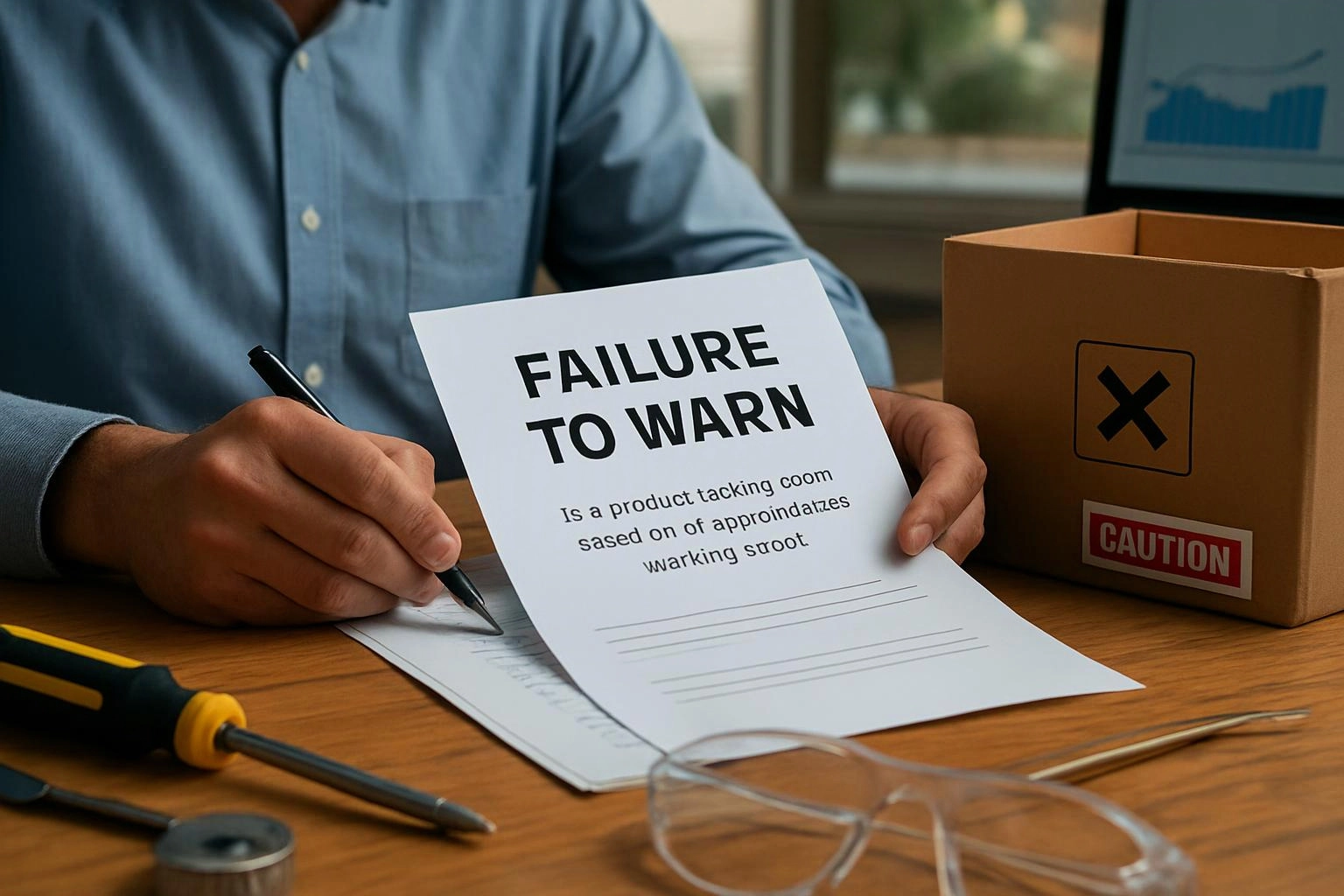
A failure to warn claim looks at the information provided with a product. A label may mention a danger but fail to explain its seriousness. A warning may also be hard to see or understand. Related service: Defective Product Claims.
Related glossary terms: Product Liability, Causation, Foreseeability.
The claim also looks at causation, or the link between the warning and the injury. The question is whether a clearer warning would have affected the person's actions. The answer depends on the facts surrounding the product's use and the injury.
A warning claim differs from a design defect claim. A design claim focuses on how the product was made to work. A warning claim focuses on the information about its risks. Both issues may arise from the same product.
From the Atlanta Auto Law team
When we review a defective product claim, we look for the warning the user actually received. Packaging may differ from an online product page or a later label. We also examine how the person used the product before the injury.
Failure to Warn in Practice: A Real-World Example
A battery charger overheats during ordinary use and burns its user. The package doesn't warn about the overheating risk. The user brings a failure to warn claim based on the missing warning.
Related Services
Related Terms
Product Liability
Product Liability is an area of law that addresses responsibility for injuries caused by defective products.
Causation
Causation is the link between an action or failure to act and an injury.
Foreseeability
Foreseeability is a legal concept that asks whether a reasonable person could anticipate a risk of harm under the circumstances.
Damages
Damages are money sought or awarded in a legal claim for harm or loss.
Atlanta Auto Law
Have Questions About Failure to Warn?
Contact Atlanta Auto Law for practical guidance on Failure to Warn and related personal injury attorney work in East Point.