
What Is an At-Fault Driver?
An at-fault driver is a motorist whose careless, reckless, or unlawful conduct caused a car crash or contributed to its harm. Fault may involve actions such as distracted driving, unsafe lane changes, or following too closely. Investigators and insurers assess evidence to determine whether the driver bears legal responsibility for resulting injuries and losses.
Quick Facts About At-Fault Driver
Category
Liability concept
Used for
Car accident claims
Common confusion
Driver fault differs from vehicle ownership
Also called
Negligent Driver, At-Fault Motorist
Often discussed with
Car Accident Claims
Key Takeaways About At-Fault Driver
- Fault depends on conduct and its connection to the crash.
- Evidence can show shared responsibility among drivers.
- The at-fault driver is not always the vehicle owner.
How At-Fault Driver Works
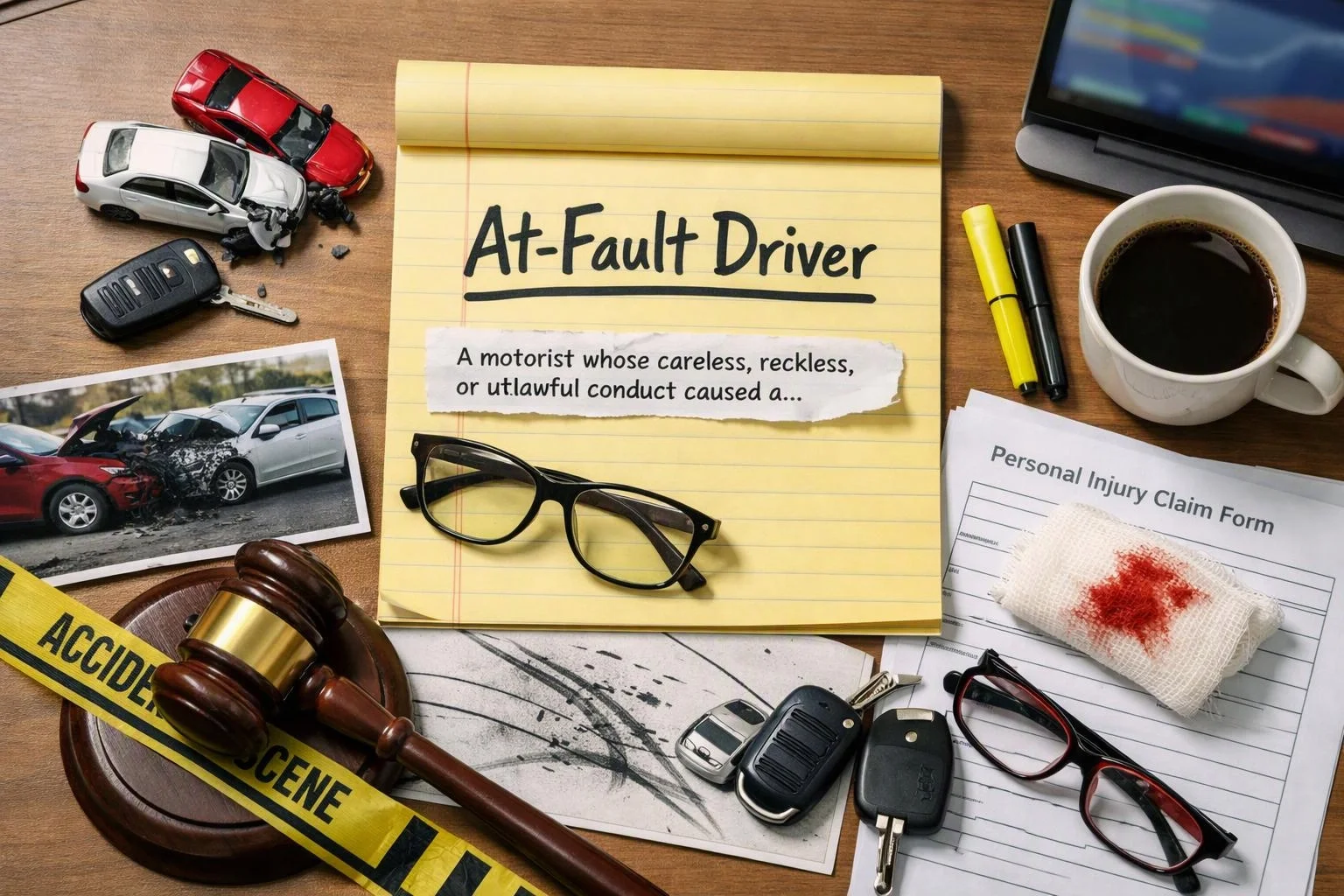
An at-fault driver is identified by connecting the driver's conduct to the collision and the resulting harm. Investigators may review traffic observations, vehicle damage, witness statements, photographs, and available records. The evidence should show what the driver did and how that conduct affected the crash.
Related glossary terms: Comparative Negligence, Causation, Proximate Cause.
Comparative Negligence may apply when more than one person contributed to the collision. A driver can bear partial responsibility even when another driver's conduct also played a role. The vehicle owner, employer, or another party may face separate questions about responsibility.
From the Atlanta Auto Law team
When we assess an at-fault driver in a car accident claim, we organize the available evidence around the driver's conduct, the collision, and the claimed harm. We also check whether another driver or responsible party may share fault. That review helps us address liability without relying on a single statement or document.
At-Fault Driver in Practice: A Real-World Example
A driver changes lanes without checking a nearby vehicle and causes a collision. The driver's conduct may support an at-fault finding when photographs, witness accounts, or other evidence connect the unsafe lane change to the crash and resulting injuries.
Related Services
Related Terms
Comparative Negligence
Comparative Negligence is a legal method for assigning responsibility when more than one person contributed to…
Causation
Causation is the connection between a person’s conduct and the harm that followed. In a medical…
Proximate Cause
Proximate Cause is the legal connection between a person’s conduct and an injury that follows. The…
Witness Statement
A Witness Statement is a written or recorded account from a person who observed an accident…
Atlanta Auto Law
Have Questions About At-Fault Driver?
Contact Atlanta Auto Law for practical guidance on At-Fault Driver and related personal injury attorney work in East Point.