
What Is Gross Negligence?
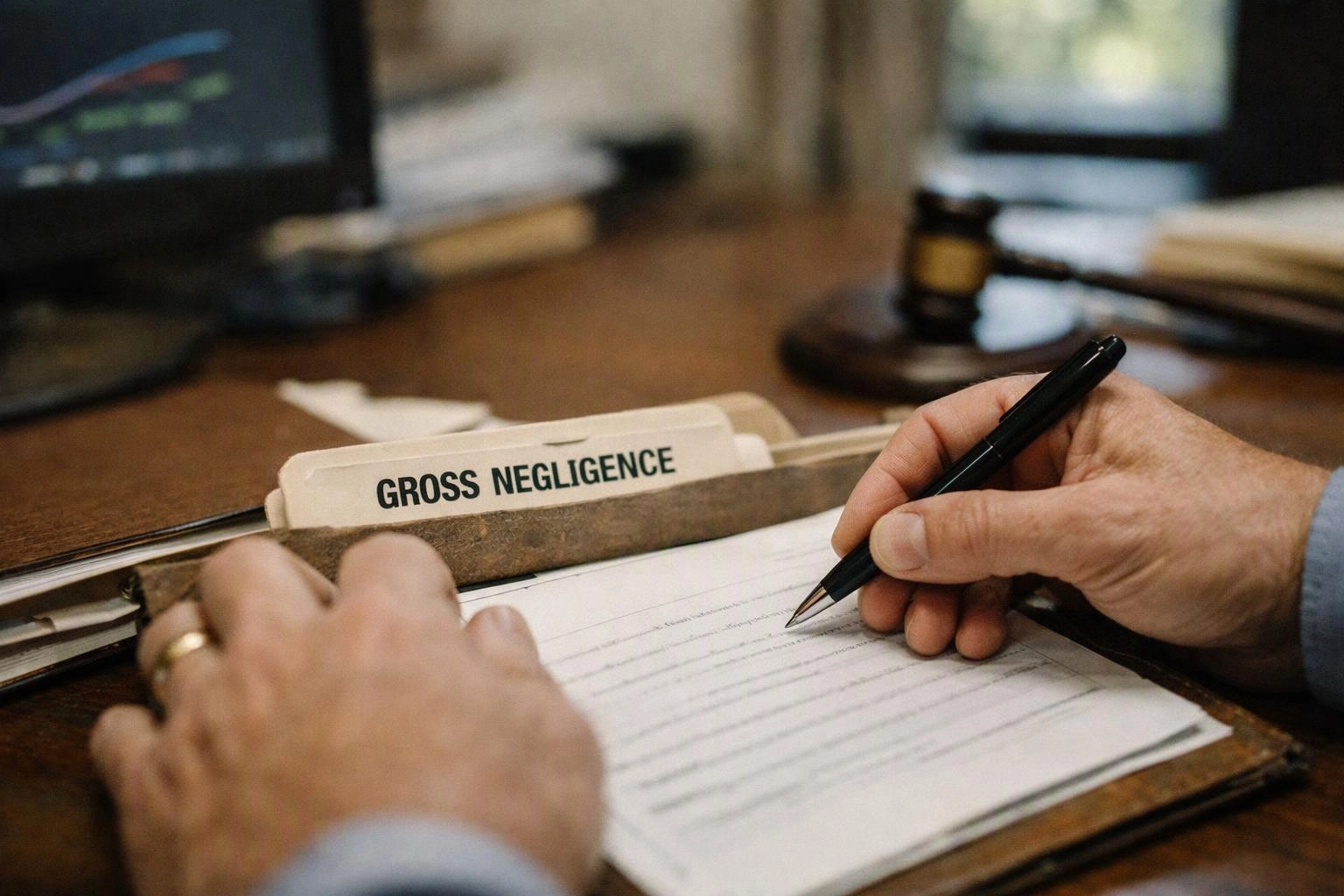
Gross Negligence is a serious departure from the level of care a reasonable person would use in similar circumstances. The conduct shows more than ordinary carelessness. It may involve conscious disregard of a known and substantial risk, such as ignoring repeated signs that a nursing home resident faces immediate harm.
Quick Facts About Gross Negligence
Category
Heightened negligence
Used for
Serious disregard of known risks
Common confusion
Ordinary negligence
Also called
Willful Negligence
Often discussed with
Nursing Home Neglect Claims
Key Takeaways About Gross Negligence
- Gross negligence goes beyond ordinary carelessness.
- Evidence must connect the conduct to a serious, known risk.
- Gross negligence is not simply another name for negligence.
How Gross Negligence Works

Gross negligence is assessed by examining the conduct and the risk that the conduct created. The review asks whether the person or organization knew, or should have recognized, a serious danger and then failed to respond in a reasonable way. Records, witness accounts, policies, and timing can help show what decision-makers knew.
Related glossary terms: Duty of Care, Comparative Negligence, Punitive Damages.
In nursing home neglect claims, the issue may involve repeated failures to respond to changes in a resident's condition. A single mistake may support an ordinary negligence claim, while a continuing disregard of clear warning signs may support a gross negligence theory. The available evidence must connect the conduct to the resident's injury. Duty of care and punitive damages are related concepts, but each has a separate legal role.
From the Atlanta Auto Law team
When we review a nursing home neglect claim, we examine care records, incident reports, staffing information, and communications for evidence of known risks. We also compare the documented response with the resident's condition and the facility's stated procedures. That review helps separate an isolated mistake from conduct showing serious disregard.
Gross Negligence in Practice: A Real-World Example
A nursing home learns that a resident has repeated falls and clear mobility concerns. Staff members continue leaving the resident without needed monitoring, ignore documented warnings, and fail to respond after another fall causes an injury. Those facts may support a gross negligence theory.
Related Terms
Duty of Care
Duty of Care is a legal obligation to act with reasonable caution toward people who could…
Comparative Negligence
Comparative Negligence is a legal method for assigning responsibility when more than one person contributed to…
Punitive Damages
Punitive Damages are a possible award meant to punish especially wrongful conduct and discourage similar behavior…
Causation
Causation is the connection between a person’s conduct and the harm that followed. In a medical…
Atlanta Auto Law
Have Questions About Gross Negligence?
Contact Atlanta Auto Law for practical guidance on Gross Negligence and related personal injury attorney work in East Point.