What Evidence Can Support a Personal Injury Claim?
Personal injury claim evidence can include medical records, accident reports, photographs, witness statements, employment records, insurance communications, and proof of losses. Atlanta Auto Law reviews how each item relates to liability, injury, causation, and damages.
Request an EstimateWhat Evidence Can Support a Personal Injury Claim?
Personal injury claim evidence supports the facts that establish who was responsible, how the injury occurred, what medical harm resulted, and which losses followed.
Liability evidence addresses fault or negligence. Causation evidence connects the incident to the injury. Damages evidence shows the financial and personal effects that followed.
We organize claim information around these questions so the supporting evidence presents a clear account of the incident and its effects.
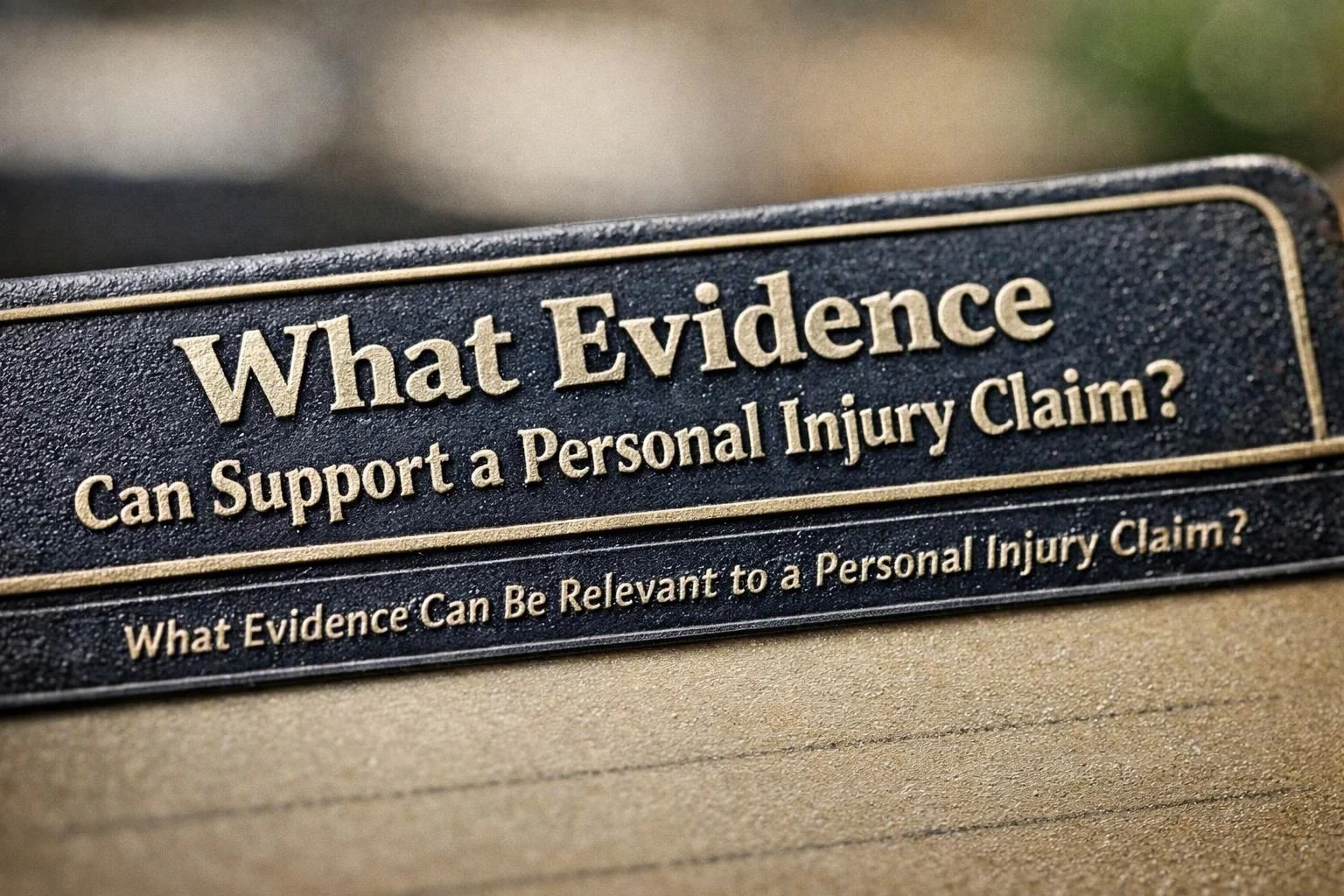
Which Types of Evidence May Be Relevant?
Relevant evidence depends on the facts of the incident, the nature of the injury, and the losses connected to the claim.
Some records explain what happened, while others document medical treatment or financial loss. The following evidence may help connect liability, causation, injury, and damages.
| Evidence | What it may help show |
|---|---|
| Medical records | The reported injury, medical treatment, diagnosis, and recovery needs |
| Accident reports | The reported location, involved parties, and initial account of the incident |
| Photographs | Vehicle damage, visible injuries, road conditions, and the scene |
| Video footage | Movement, timing, traffic conditions, and the sequence of events |
| Witness statements | Independent observations about what happened |
| Employment records | Missed work, lost wages, and changes in earning capacity |
| Insurance records | Claim communications, requests, statements, and settlement offers |
| Personal journal | Daily limitations, symptoms, pain, and changes in routine |
How Do Medical Records Relate to a Personal Injury Claim?
Medical records connect the reported injury to the incident, document treatment, and help show the medical effects and related expenses.
Emergency treatment records may describe the first symptoms and findings. Diagnostic tests can provide results that support the injury description. Treatment plans and physician notes can show the care that followed.
Medical bills help document expenses related to treatment. Records may also address pre-existing conditions and whether the incident worsened or changed an earlier condition.
We compare the medical history with the incident account, treatment timeline, and claimed losses when reviewing causation and damages.
How Can Evidence Show What Happened in a Car Crash?
Crash evidence can show the location, sequence, contributing conditions, and physical impact of the collision.
Useful materials may include the crash report, vehicle damage photographs, road condition records, traffic signal information, dashcam footage, black box data, and scene photographs.
What Evidence Can Show the Financial and Personal Effects of an Injury?
Loss evidence shows how the injury affected income, expenses, daily activities, and quality of life.
Employment records can support lost wages and a claim for reduced earning capacity. Pay records, employer information, and work restrictions may help explain the effect on income.
Out-of-pocket expenses may include treatment-related costs, transportation, medication, and household services. Keep receipts and other records that connect each expense to the injury.
Pain and suffering may involve physical discomfort, emotional effects, sleep changes, and daily activity limitations. A personal journal can preserve consistent observations about these effects.
How May an Attorney Help With Insurance Communications?
Insurance communications may affect how an insurance company evaluates liability, causation, injury, and damages.
An insurance adjuster may request a recorded statement, medical authorization, bills, or other claim documentation. We review these requests and help determine how they relate to the claim.
A settlement offer may not account for every claimed loss or disputed issue. We examine the available evidence and explain how it relates to settlement evaluation.
When liability is disputed, we organize records, photographs, witness testimony, and other accident evidence to address the stated position. We also help keep communications accurate and consistent.
What Should Passengers Collect After a Car Crash?
Passenger injury evidence should preserve information about the crash, the injuries, the vehicles involved, and the people who witnessed the event.
Passengers may not control the vehicle or know every detail about the drivers. Their observations and records can still help establish what happened and how the injury developed.
What Mistakes Can Weaken Personal Injury Evidence?
Inconsistent statements, missing documentation, unpreserved evidence, and statements that minimize the injury can make a claim harder to evaluate.
Delayed medical care may create questions about the timing or cause of symptoms. Explain changes in symptoms to medical providers and keep records of appointments and treatment.
Social media posts may be read without the context of the injury. Avoid posting about the incident, recovery, activities, or disputed facts without understanding how the post may be interpreted.
Missing records can make financial loss, medical treatment, or daily limitations difficult to document. We identify gaps and work with the available claim documentation without relying on speculation.
Preserve photographs, video, messages, vehicle information, and insurance communications. Do not alter or delete materials that may relate to liability, causation, or damages.
How Can Family Members Support Someone With a Personal Injury Claim?
Family members can help preserve records, document changes in daily life, support medical follow-through, and identify firsthand observations.
Family observations may help explain changes that are difficult to capture in medical records. The strongest observations describe what the family member personally saw or did.
How Does Atlanta Auto Law Review Evidence for a Claim?
Atlanta Auto Law reviews the available evidence, identifies connections between the incident and the injury, and helps organize documentation relevant to the claim.
Our team separates the evidence into liability, causation, injury, and damages. We compare the incident account with medical records, photographs, witness statements, employment records, and insurance communications.
We look for gaps, conflicting accounts, and records that may clarify the claim. Our review may also address accident reconstruction issues, property damage, medical treatment, financial loss, and daily limitations.
A Personal Injury Attorney can help explain how the evidence fits the claim. A Car Accident Lawyer can focus on crash facts, vehicle damage, witness testimony, and liability analysis when the injury arose from a collision.
Contact Atlanta Auto Law to discuss the available evidence and the next steps for organizing your claim.
Questions About Personal Injury Claim Evidence
Can text messages support a personal injury claim?
Yes, text messages can support a personal injury claim when they help show what happened, describe an injury, document missed work, or preserve communications about the incident. Atlanta Auto Law reviews the sender, timing, context, and connection to liability, causation, injury, or damages.
Can social media posts affect a personal injury case?
Yes, social media posts can affect a personal injury case when the content appears to conflict with claimed symptoms, limitations, or the account of the incident. Preserve relevant posts and avoid deleting or changing materials that may relate to the claim.
Can a witness support a personal injury claim without seeing the entire accident?
Yes, a witness may support part of a personal injury claim by describing what the witness personally saw, heard, or observed before or after the incident. The value of the statement depends on its connection to the disputed facts and the witness's firsthand knowledge.
What should I do if important injury evidence is missing?
If important injury evidence is missing, identify where the record may exist and preserve related materials that remain available. Medical providers, employers, witnesses, insurers, and family members may have information that helps fill a documentation gap.
Can evidence of a pre-existing condition affect a personal injury claim?
Yes, evidence of a pre-existing condition can affect a personal injury claim because the records may need to distinguish earlier symptoms from changes after the incident. Medical history, treatment notes, diagnostic results, and physician opinions may help address causation and the extent of the injury.